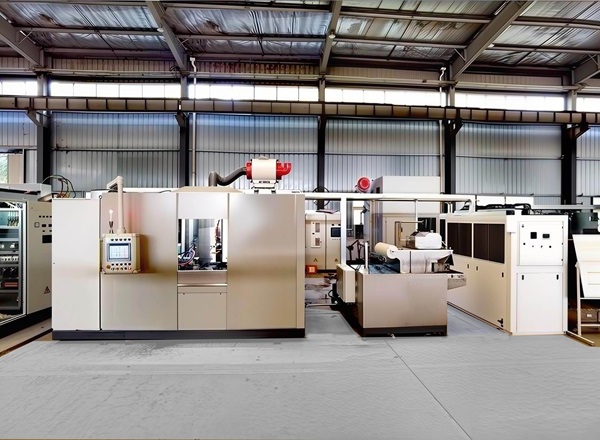
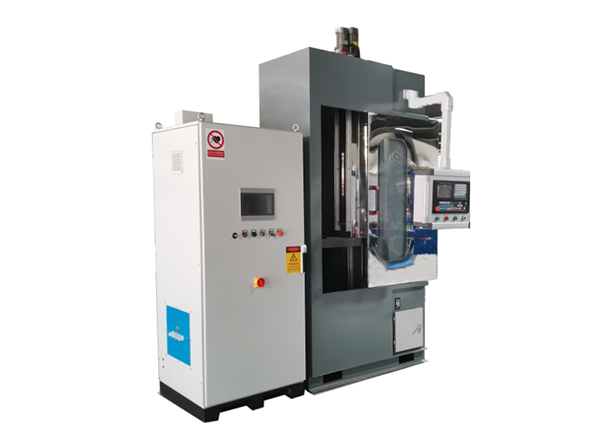
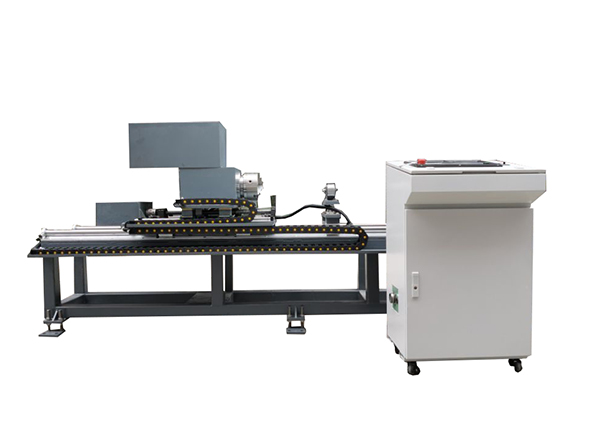
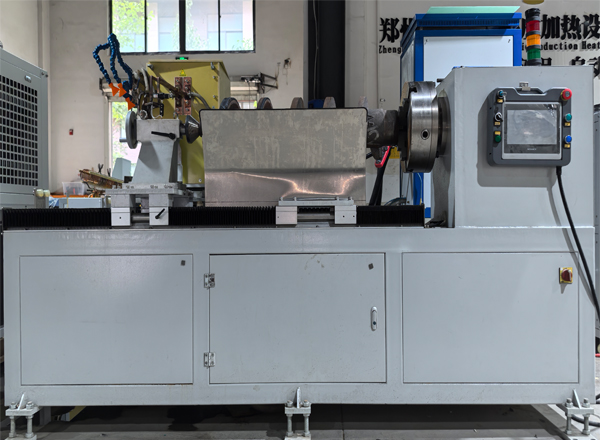
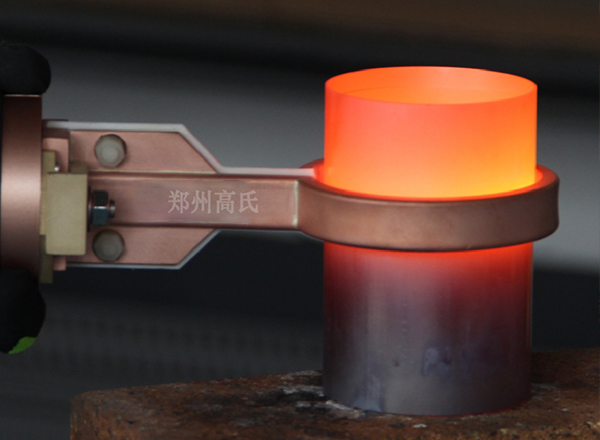
Rotary quenching machine tools are specialized heat treatment equipment integrating induction heating, continuous operation, and intelligent temperature control. Based on a rotary table design, they are widely used in the surface quenching heat treatment of various small and medium-sized metal parts in the machinery manufacturing industry. They are key equipment for improving the hardness, wear resistance, and fatigue strength of parts. The machine tool uses a horizontal or vertical rotary table as its core actuator. The table rotates uniformly around a central axis, with multiple station tracks evenly distributed on it. Each track is equipped with a workpiece positioning mechanism that can slide up and down, ensuring accurate and reliable workpiece positioning during processing. Quenching induction coils and cooling pipes are arranged sequentially above the table along the direction of rotation. Below, corresponding to the quenching stations, drive motors and lifting mechanisms are installed. Torque transmission is achieved through a quick-connect device, allowing the workpiece to rotate synchronously and uniformly during quenching, ensuring uniform heating.

In terms of technical characteristics, rotary hardening machine tools integrate digital control and high-efficiency operation concepts. They employ a standard CNC system to achieve fully automated control of the entire process, precisely controlling key parameters such as rotary table speed, induction heating power, cooling temperature, and time. Some models are equipped with a parameter management and monitoring system, enabling real-time recording of process parameters and historical data retrieval, facilitating production traceability and process optimization.
Their multi-station parallel operation design allows workpiece loading/unloading, heating, and cooling processes to be performed simultaneously without interference, significantly shortening the single-piece processing cycle and substantially improving production efficiency. This makes them particularly suitable for the standardized processing of batches of parts.
The machine tool is equipped with a digital transistor induction heating power supply, offering wide bandwidth and strong power stability. It can flexibly match the optimal heating process to different materials (such as carbon steel and alloy steel) and workpiece specifications, preventing defects such as deformation and cracking.
The cooling system employs fully digital temperature setting and automatic temperature control. Through precise spraying or immersion cooling, it rapidly achieves the martensitic transformation of the workpiece surface, effectively improving the surface hardness and internal toughness of parts, and extending their service life.
In terms of structural design, rotary quenching machine tools balance practicality and safety. The slideway incorporates a sliding sleeve and a supporting rotation mechanism, reducing wear on the workpiece positioning mechanism and extending the equipment's lifespan. Some models integrate an automatic gripper and unloading structure, achieving fully automated workpiece clamping, quenching, and unloading, reducing manual labor intensity and avoiding safety hazards associated with human contact with high-temperature workpieces.