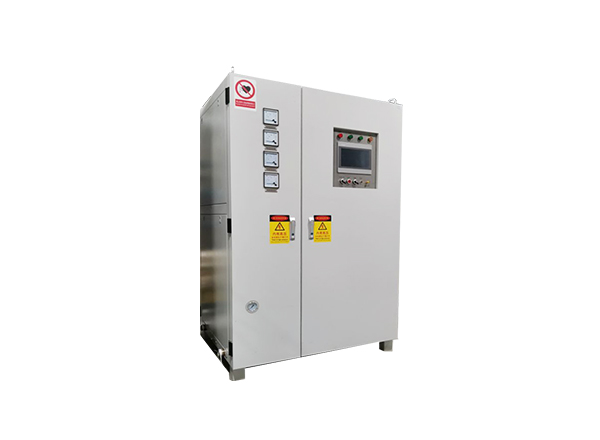
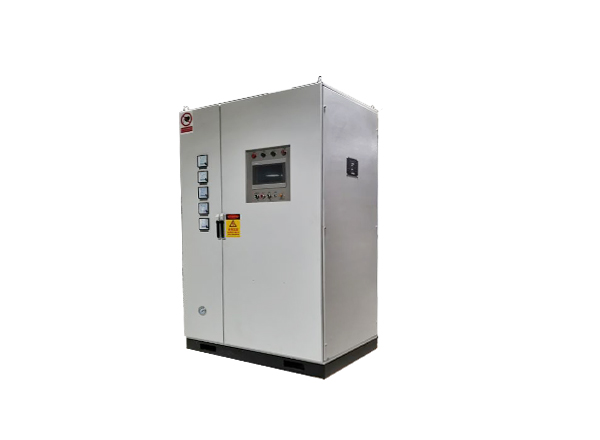
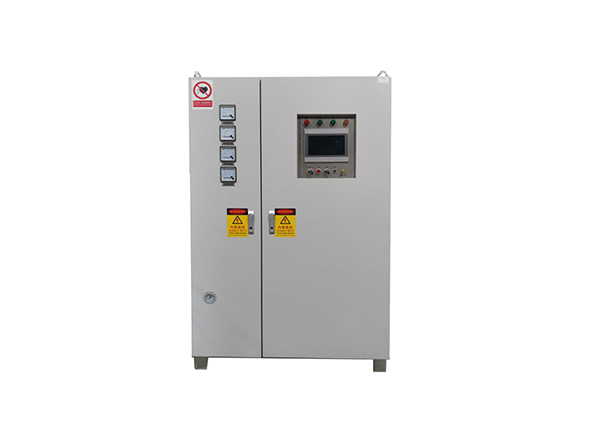
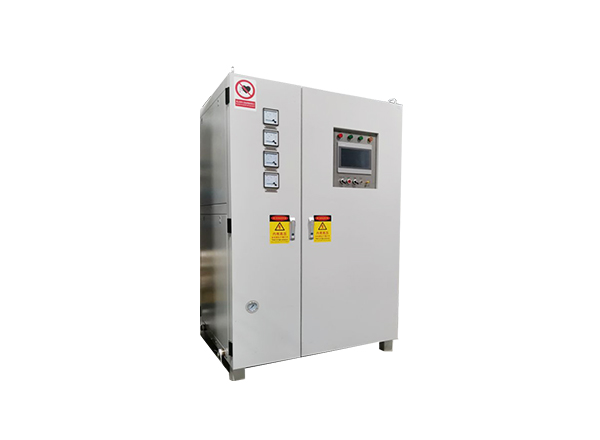
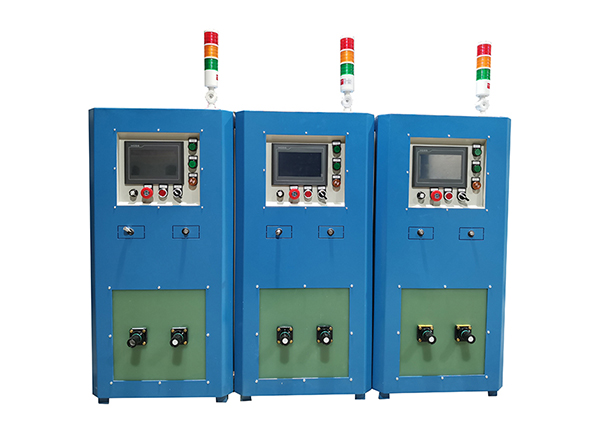
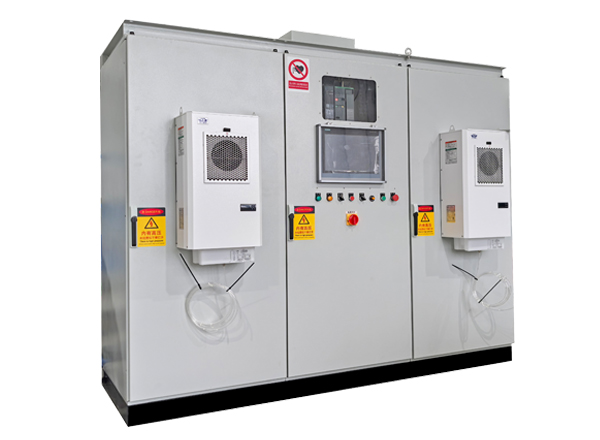
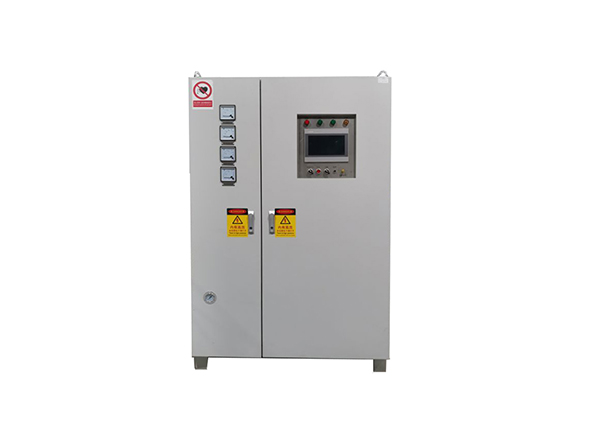
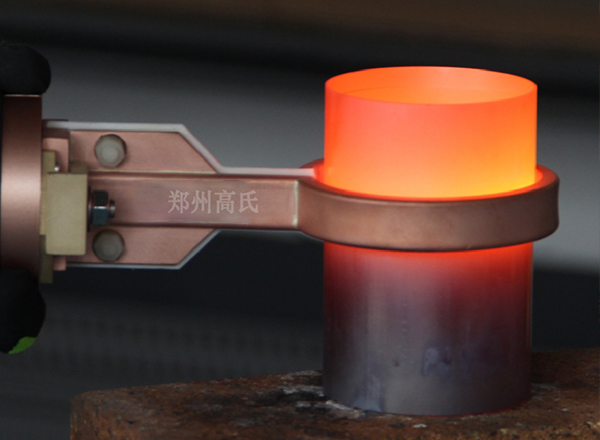
The GS-ZP-400 Digital Intermediate-Frequency Induction Heating Equipment is an IGBT-based induction furnace. Leveraging the rapid and precise processing capabilities of a DSP processor, the system achieves significantly improved accuracy and speed in frequency tracking, thereby ensuring that it consistently operates near its optimal working point. It delivers high heating temperatures and rapid heating rates, resulting in short processing times and uniform heating of metal materials. The process minimizes surface oxidation of the heated object and reduces workpiece deformation; furthermore, it is a non-contact heating method. The unit features a maximum output power of 400 kW and operates within a frequency range of 2 to 10 kHz. Typically, the actual operating frequency is determined by the heating coil and capacitors, tailored to match the dimensions of the workpiece. The core of the equipment features IGBT heat sinks constructed from pure copper; the internal connection structure utilizes pure copper panels and high-strength rubber tubing, while the water circulation lines are made of stainless steel. These design features successfully ensure the machine's robust reliability and extended service life.

|
Input voltage |
Three phase 380V/50-60Hz |
|
Input current |
600A |
|
Output power |
400KW |
|
Oscillation frequency |
2-10KHZ |
|
Load rate |
99% |
|
Cooling water pressure |
0.25Mpa |
| Cooling water flow |
≥25m³/H |
As a digitally upgraded product, this unit's core strengths lie in comprehensive digital control and highly efficient energy utilization. Unlike traditional thyristor-based heating equipment, it employs a dual ARM+DSP digital chip control architecture to achieve millisecond-level response and precise regulation of frequency, power, and temperature. This enables the system to automatically adapt to metal workpieces of varying materials and specifications—without the need for manual intervention—thereby ensuring the stability and consistency of the heating process and effectively eliminating the power fluctuation issues often associated with load variations in traditional equipment.
Featuring precise temperature control and versatile adaptability, this equipment meets the sophisticated processing requirements of diverse industries. The unit is equipped with a digital closed-loop temperature control system, achieving a temperature control accuracy of ±5°C. It supports four distinct operating modes—current, power, temperature, and process—and allows for the pre-configuration of multi-segment heating curves. This capability enables both uniform heating of entire workpieces and the execution of localized processes such as quenching, annealing, and tempering, thereby effectively preventing workpiece overheating and deformation while ensuring consistent product processing quality.
High efficiency and energy conservation constitute one of this product's core competitive strengths. Leveraging IGBT power modules and series resonant inverter technology, the energy conversion efficiency exceeds 90%, with a stable power factor of ≥0.9. Compared to traditional resistance heating or coal-fired heating equipment, this system achieves electricity savings of over 50% and water savings of over 70%. Furthermore, heat is applied directly to the interior of the workpiece via the eddy current effect, eliminating conduction losses. This results in an extremely thin layer of oxidation and decarburization, significantly reducing metal material waste and minimizing wear on forging dies and cutting tools; over the long term, this translates into a substantial reduction in corporate production costs.
Enhanced operational convenience and intelligent upgrades serve to significantly reduce labor costs. The equipment features a clean, intuitive digital control panel with clear parameter displays and simplified operating procedures, allowing even novice users to master its operation quickly. Furthermore, it supports remote monitoring and energy management capabilities, enabling the real-time acquisition of heating data and the live visualization of temperature-time curves. In certain scenarios, the system can operate in a fully automated, unmanned mode, thereby substantially boosting labor productivity. Designed for safety, reliability, and ease of maintenance, the unit is ideally suited for deployment in complex industrial production environments.